
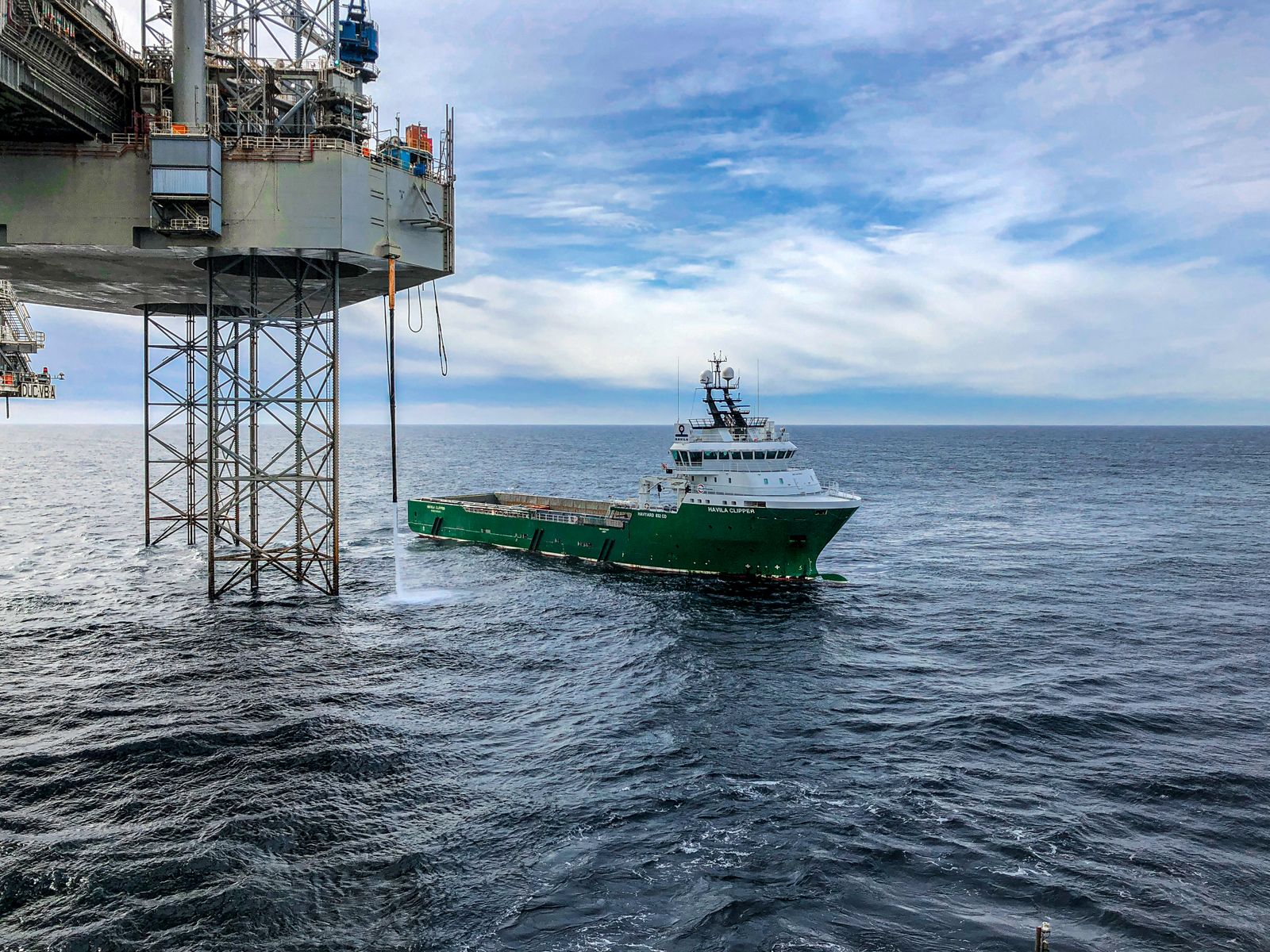
Marine Anti-Vibration Mounts & Mats for Shipbuilding & Offshore
Robust anti-vibration mats and elastomer bearings for engines, generators, decks and offshore installations – even in cold, salt water and heavy seas.
✓ Engineered selection
based on your machine data
✓ Cut to size
mats, strips, pads & multi-layer systems
✓ Fast quotes
short-notice production & express possible
✓ Industry & research
we also supply leading universities & institutes
What natural frequency does your mounting need? → Try the free vibration isolation calculator
Vibration at sea: constant and demanding
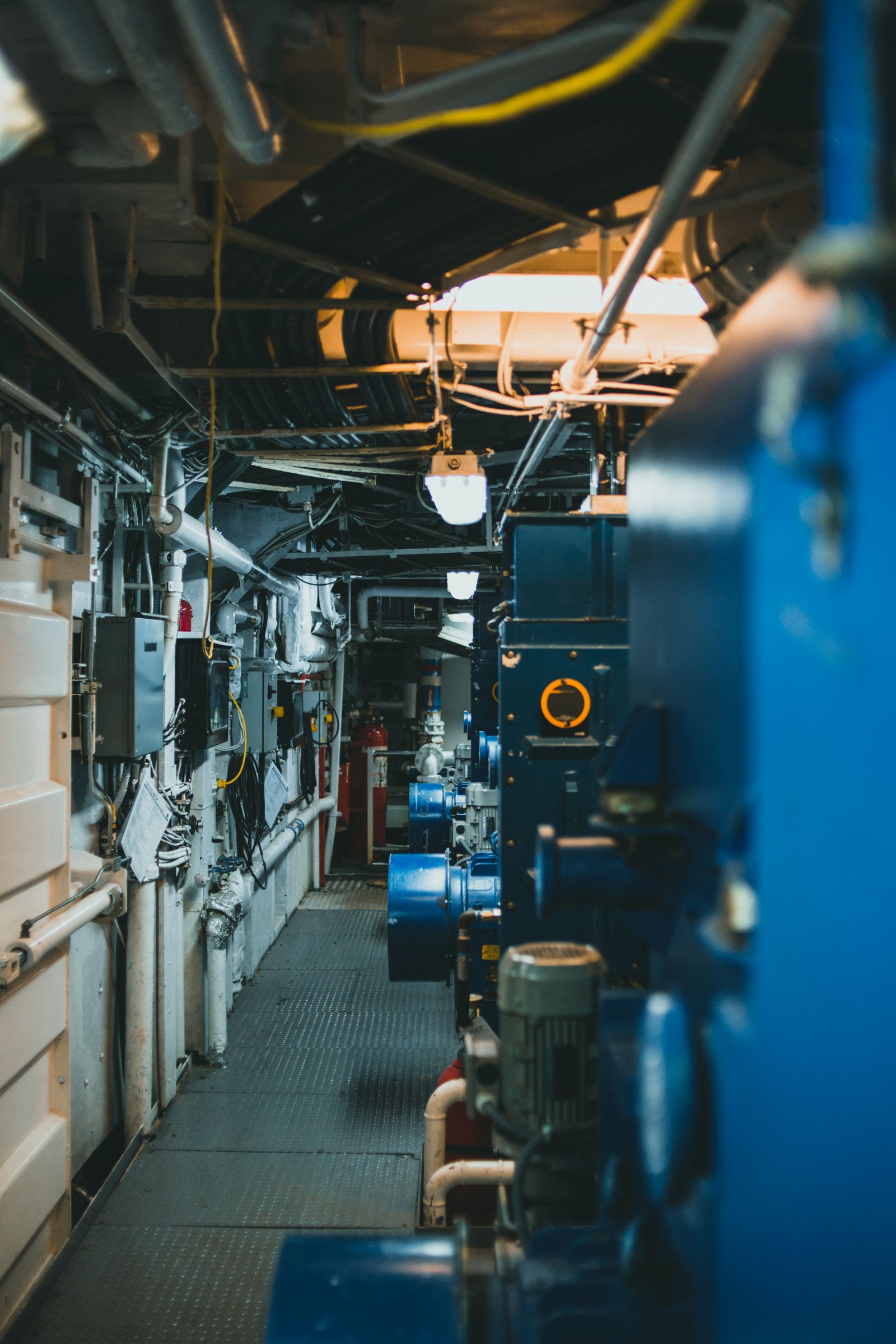
On board, engines, generators and auxiliary units often run around the clock. Their vibration is transmitted via the seatings into the hull and as structure-borne noise into accommodation areas. Add to this shock loads from waves and wind, and movement due to sea state and temperature changes – conditions that mounts must withstand over the long term.
Quiet on board
Resiliently mounting engines and units reduces structure-borne noise in cabins, on the bridge and in accommodation.
Shock-resistant
Elastomers absorb shock loads from the sea and protect machinery, seatings and structure.
Longer maintenance intervals
Less vibration means less wear and safe operation in extreme conditions.
Typical applications
Our anti-vibration solutions are used in shipbuilding and offshore, for example for:
- Marine engines and generators
- Pumps, compressors and auxiliary units on board
- Elastomer and sliding bearings under glass dome roof structures
- Mounting main masts on sailing yachts
- Offshore platforms and supply vessels
- Refrigerated and freezer areas on board
Our solution: robust isolation mats made to measure
For marine applications, we supply particularly robust isolation mats that stay flexible even in the cold and are cut individually for your project.
- Isolation mats up to 50 mm thick, cut to size
- Temperature-resistant from −35 °C to +90 °C
- Oil- and fuel-resistant materials (e.g. NBR) for the engine room
- Weather-, ozone- and UV-resistant materials (e.g. EPDM, CR) for open decks
Recommended systems & technical data
At sea, mounts must not only isolate vibration but also withstand shocks, movement and aggressive environments over the long term.
| Recommended system | Load range (static continuous load) | Suitable for |
|---|---|---|
| Elastomer mat, cold-flexible | as designed, up to 50 mm thick | Engines, generators, refrigerated areas (−35 °C to +90 °C) |
| PUR elastomer, medium to heavy | 0.11 – 0.85 N/mm² | Units and auxiliary machinery with low tuning |
| Elastomer and sliding bearings (CR, EPDM, NBR) | as designed | Dome roofs, masts, deckhouses |
- Take media in the engine room (oil, fuel) into account when choosing the material
- Make pipe and exhaust connections flexible
- Allow for shock loads from sea state in the load class
→ All load classes: Materials & technical data · Check your own values: Isolation calculator · Specification texts & datasheet (PDF, German)
Relevant datasheets (PDF, German): Elastomer sheets & pads · Rubber granulate mats G1–G8
Worked example: auxiliary diesel generator on board
How low does the mounting of an onboard unit need to be tuned? The following simplified example looks at an auxiliary diesel generator running at 1,500 rpm on four PUR elastomer pads.
- Mass of the unit: 4,000 kg, evenly distributed over 4 support points
- Pad size: 4 × 200 × 200 mm = 160,000 mm²
- Bearing pressure: 4,000 kg × 9.81 / 160,000 mm² ≈ 0.25 N/mm² – within the load range “PUR elastomer, medium to heavy” (0.11 – 0.85 N/mm²) from the table above
- Excitation frequency: 1,500 rpm ÷ 60 = 25 Hz (rotational frequency); for four-stroke engines, also the half engine order at 12.5 Hz
- Assumed natural frequency of the mounting: 10 Hz or 8 Hz
The calculation uses the undamped single-degree-of-freedom system: η = excitation frequency / natural frequency, T = 1 / (η² − 1), isolation efficiency = 1 − T, level reduction = 20 · log10(1/T) dB. Isolation only begins at η > √2.
| Excitation | Bearing with f₀ = 10 Hz | Bearing with f₀ = 8 Hz |
|---|---|---|
| 25 Hz (1,500 rpm) | η = 2.5 → ≈ 81 % (≈ 14 dB) | η ≈ 3.1 → ≈ 89 % (≈ 19 dB) |
| 12.5 Hz (half engine order) | η = 1.25 < √2 → no isolation, amplification (≈ +5 dB) | η ≈ 1.6 → ≈ 31 % (≈ 3 dB) |
What the example shows: for the rotational frequency of 25 Hz, a mounting with 10 Hz theoretically achieves around 80 % isolation efficiency. But if lower engine orders occur, the same mounting can be close to resonance and amplify vibration. The lowest relevant excitation frequency is therefore always decisive. At sea, there are also shock loads from sea state and ship motion that the mounting must take up as well – without bottoming out. Our guide Mat not working? explains why a mounting can fail despite a mat.
Simplified example, guide values only – the binding design is always project-specific. Check your own values with the isolation calculator. You can request a material sample via the quick quote form.
How your project works
1. Enquiry
Tell us about your machine or plant, its weight, footprint and speed – the easiest way is via our configurator.
2. Design
We select material, hardness, thickness and format to suit the load and frequency and agree the solution with you.
3. Manufacture
Your anti-vibration mats or pads are cut to size – as a mat, strips, pads or a multi-layer system.
4. Delivery
You receive ready-to-install elements that can be fitted under machines and foundations with little effort. Made and shipped from Germany – EU-wide delivery; UK delivery DAP/DDP on request (customs handled).
Frequently asked questions
What temperatures can the mats withstand?
Our robust isolation mats are temperature-resistant from −35 °C to +90 °C and remain cold-flexible.
Are the materials resistant to salt water and oil?
We select the material to suit the environment: e.g. NBR for contact with oil and fuel, EPDM or CR for weathering and open decks.
Do you also supply for yachts?
Yes. Elastomer bearings under the main masts of sailing yachts prevent damage to the hull from high loads and deformation.
Do mounts need classification society approval?
Whether a type approval or evidence from a classification society such as DNV, Lloyd’s Register or Bureau Veritas is required for a mount depends on the ship type, installation location and component. The requirements of the shipyard and the class society are decisive. Please tell us the required evidence with your enquiry – we will clarify in the quote which documents are available for the product type concerned.
What should I look out for when installing in a saline environment?
As well as the right elastomer, the metal parts matter: shims, bolts and brackets should be corrosion-protected or made of suitable stainless steel. Avoid standing water under the mounts and check the mounting for cracks and deformation during regular maintenance. The resistance of the elastomer to salt water depends on the product type – the details are in the datasheet or the quote; the Materials & technical data page gives an overview.
What excitation frequencies occur with marine diesels and generators?
The fundamental frequency is derived from the speed: 1,500 rpm ÷ 60 = 25 Hz. Four-stroke combustion engines also produce engine orders, such as the half order (12.5 Hz at 1,500 rpm) and higher orders depending on the number of cylinders. The lowest relevant frequency governs the design – so please tell us the engine type, speed and number of cylinders. The isolation calculator gives initial estimates.
How are shocks from sea state taken into account?
The load class is chosen according to the static continuous load. Sea state, ship motion and heel generate additional dynamic loads that the mounting must take up without bottoming out or deforming permanently. The mounting should therefore not be used right up to the upper limit of its load range; where necessary, buffers or motion limiters provide additional restraint for the unit.
Can pipework and exhaust systems bridge the isolation?
Yes. Any rigid connection between a resiliently mounted unit and the ship’s structure acts as a acoustic bridge and carries structure-borne noise past the mounting. Pipe, exhaust and cable connections should therefore be flexible, for example with expansion joints or hoses.
Want to reduce vibration on board?
Tell us the unit, weight and operating conditions – we will design the right solution.
🗣️ We can advise you in English, German and French – our team includes English- and French-speaking staff.
Short on time? The quick quote is enough to get started. Prefer more detail? Use our quote configurator or contact us directly.
More applications: Transformers · Pumps & Compressors · CNC Machines & Presses · HVAC & Heat Pumps · Railway & Transport · Buildings & Foundations · Laboratories & Research
Knowledge & tools: Materials & technical data · Isolation calculator · Mat, mount or spring? · Mat not working? · Downloads · FAQ · About us