
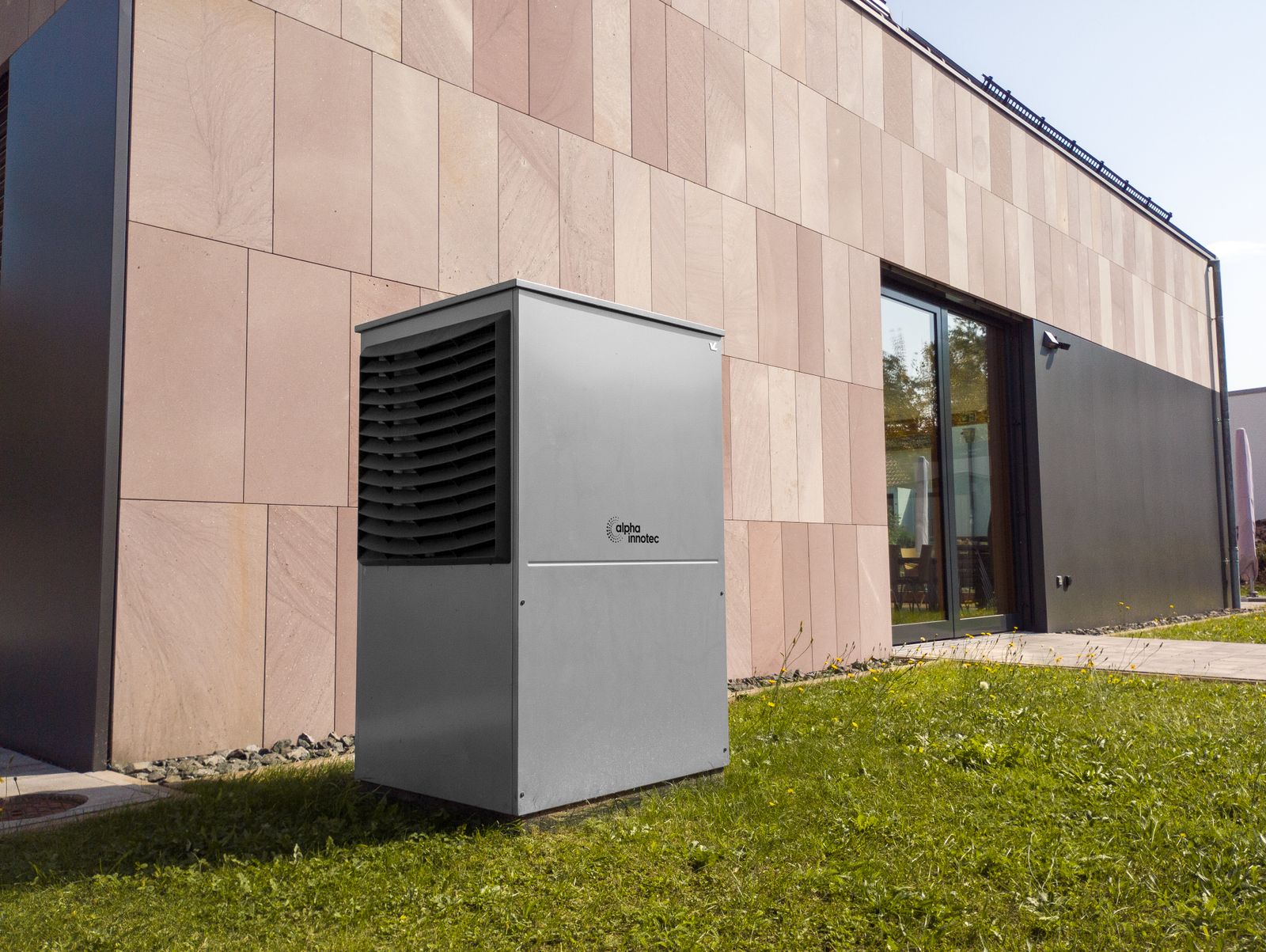
Heat Pump Anti-Vibration Mounts & HVAC Vibration Isolation
So that building services don’t disturb anyone: anti-vibration mats and pads for heat pumps, ventilation units, air-conditioning and refrigeration plant – indoors and outdoors.
✓ Engineered selection
based on your machine data
✓ Cut to size
mats, strips, pads & multi-layer systems
✓ Fast quotes
short-notice production & express possible
✓ Industry & research
we also supply leading universities & institutes
What natural frequency does your mounting need? → Try the free vibration isolation calculator
Prevent structure-borne noise in the building
Heat pumps, ventilation units, dry coolers and air-conditioning systems often run around the clock. Without isolation, their vibration is transmitted via the plinth, roof or floor slab into the building as structure-borne noise – as a low-frequency hum that is particularly disturbing in living and working spaces and can also lead to disputes with neighbours.
Quiet in the building
A resilient mounting prevents vibration from travelling through the structure into living and working spaces.
Weatherproof
EPDM-based mats are resistant to weather, ozone and UV radiation – ideal for rooftop and outdoor installation.
Easy installation
Mats and pads are simply placed under the plinth, wall bracket or base frame – including on existing installations.
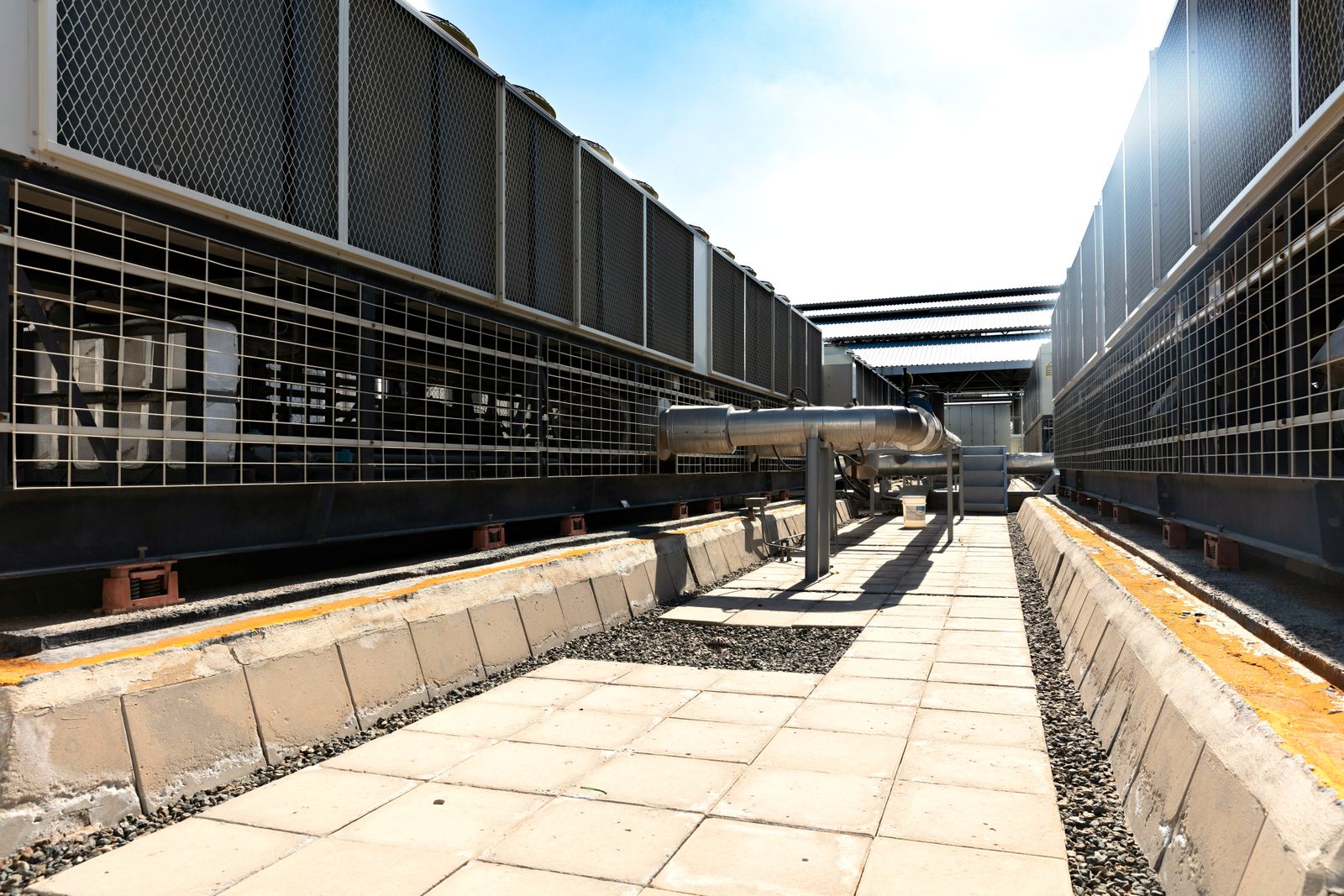
Typical applications
Typical applications in building services:
- Air-to-water heat pumps (indoor and outdoor units)
- Ventilation and air-conditioning units (air handling units)
- Dry coolers and chillers on the roof
- Heating and circulating pumps in the plant room
- Standby generators and CHP units
- Lift drives and building services plant rooms
Solutions for new build and existing buildings
Whether it is a house, an office building or a hospital: we design the vibration isolation for the weight and installation situation of your plant – for ground plinths, wall brackets, roofs or intermediate floors.
- EPDM for permanent outdoor applications
- Elastomer pads and strips for plinths and brackets
- Full-surface mats for plant rooms and rooftop installation
- Made to measure for special formats and heavy plant
Recommended systems & technical data
Building services plant is usually relatively light but has to be tuned very low, because even small amounts of structure-borne noise are perceived as a hum in living and working spaces. Soft, highly resilient materials with natural frequencies below 10 Hz are therefore the first choice here.
| Recommended system | Load range (static continuous load) | Suitable for |
|---|---|---|
| PUR elastomer, very light to medium | 0.011 – 0.22 N/mm² | Heat pumps, ventilation and air-conditioning units – natural frequencies down to approx. 8 – 9 Hz |
| Rubber granulate/fibre mat, class G1 – G3 | 0.02 – 0.10 N/mm² | Plant rooms, screed isolation, plinths |
| EPDM pads and strips | as designed | permanent outdoor installation, roofs, wall brackets |
- Connect condensate, refrigerant and electrical lines flexibly as well
- Wall mounting only with isolated brackets – better free-standing on a plinth
- For light units, use pads instead of a full-surface mat so that the bearing pressure is in the optimum range
→ All load classes: Materials & technical data · Check your own values: Isolation calculator
Relevant datasheets (PDF, German): PUR elastomers · Rubber granulate mats G1–G8
Worked example: heat pump with variable-speed compressor
Simplified example, guide values only – the binding design is always project-specific. The example shows why, with inverter heat pumps, the lowest compressor speed determines the tuning.
| Quantity | Assumption / calculation | Result |
|---|---|---|
| Unit | Outdoor unit of an air-to-water heat pump, operating weight 180 kg, 4 feet on 100 × 100 mm pads | Support area 4 × 10,000 mm² = 40,000 mm² |
| Bearing pressure | 180 kg × 9.81 / 40,000 mm² | ≈ 0.044 N/mm² → within the range of very light to medium PUR elastomer (0.011–0.22 N/mm²) |
| Natural frequency of the mounting (assumed) | Guide value for PUR elastomer: down to approx. 8–9 Hz | f0 ≈ 9 Hz |
| Excitation frequency | Variable-speed compressor, e.g. 30–90 Hz | variable |
Isolation efficiency across the speed range at f0 ≈ 9 Hz:
| Operating point | Excitation frequency | Frequency ratio η | Isolation efficiency | Level reduction |
|---|---|---|---|---|
| Part load (lowest speed) | 30 Hz | ≈ 3.3 | ≈ 90 % | ≈ 20 dB |
| medium load | 60 Hz | ≈ 6.7 | ≈ 97.7 % | ≈ 33 dB |
| Full load | 90 Hz | ≈ 10.0 | ≈ 99 % | ≈ 40 dB |
Calculation: isolation efficiency = 1 − 1/(η² − 1) with η = excitation frequency / natural frequency; dB = 20 · log10(1/transmissibility). The values apply to an undamped single-mass model on a rigid base – on lightweight floors or roofs and with rigidly connected pipework, the effect is lower. Fans often run more slowly than the compressor and should be considered too. For MCS 020, BS 4142 and related standards, see Standards & guidelines.
→ Check your own values in the isolation calculator
How your project works
1. Enquiry
Tell us about your machine or plant, its weight, footprint and speed – the easiest way is via our configurator.
2. Design
We select material, hardness, thickness and format to suit the load and frequency and agree the solution with you.
3. Manufacture
Your anti-vibration mats or pads are cut to size – as a mat, strips, pads or a multi-layer system.
4. Delivery
You receive ready-to-install elements that can be fitted under machines and foundations with little effort. Made and shipped from Germany – EU-wide delivery; UK delivery DAP/DDP on request (customs handled).
Frequently asked questions
Will an anti-vibration mat help with the hum from my heat pump?
If the noise is transmitted as structure-borne noise via the plinth or wall, a properly designed isolation is one of the most effective measures. However, it does not reduce airborne noise from the unit itself.
Are the mats suitable for outdoor installation?
Yes. For outdoor use we recommend EPDM, which is resistant to weather, ozone and UV radiation.
What information do you need?
We need the unit type, the operating weight, the dimensions of the support area or feet and the installation situation (floor, wall or roof).
Which noise requirements apply to heat pumps and building services plant?
In the UK, BS 4142 is the usual method for assessing noise from fixed plant at neighbouring dwellings – for example a heat pump in the garden or a dry cooler on the roof – and MCS 020(a) sets the noise assessment for air source heat pumps under permitted development. BS 8233 and Approved Document E deal with sound in and between rooms in buildings; in Ireland the EPA guidance NG4 is often referred to, and in Germany TA Lärm and DIN 4109 play the corresponding roles. Take the actual values from the documents themselves; our Standards & guidelines page gives an overview. A resilient mounting mainly acts on the structure-borne component.
Heat pump on a flat roof: how do I protect the waterproofing?
The unit should not stand directly on the roof waterproofing but on a load-spreading plinth or frame with a protective layer underneath, so that the waterproofing is not damaged. The resilient mounting goes between the unit and the plinth or under the plinth. The compatibility of the material with the waterproofing (e.g. bitumen or single-ply membrane) and the load-bearing capacity of the roof must be checked for each project – agree this with the roofer and structural engineer. For outdoor installation we recommend EPDM.
Mat or spring element for ventilation units on lightweight floors?
On lightweight timber joist or light-gauge steel floors, the floor itself is flexible and can vibrate too; fans also often run at low speeds. If the natural frequency achievable with a mat (PUR down to approx. 8–9 Hz) is not low enough, lower-tuned steel spring elements are the better choice. Our guide Mat, mount or spring? helps you decide.
How do I stop the unit slipping without creating an acoustic bridge?
Bolts or brackets that rigidly connect the unit to the base bridge the mounting and carry structure-borne noise onwards – they become a acoustic bridge. Resiliently isolated fixings are better, such as bolts with resilient sleeves and washers, or lateral stops with a resilient interlayer. If outdoor units need securing against wind, this should also be isolated.
What applies to variable-speed (inverter) heat pumps?
Inverter heat pumps continuously adjust the compressor speed to the heating load. The lowest compressor frequency governs the design, because that is where the frequency ratio is smallest. Take the speed or frequency range from the unit datasheet and include it in your enquiry – the worked example above shows the effect.
Do heat pumps need anti-vibration mounts to meet MCS 020 or planning noise limits?
MCS 020(a) and planning noise assessments (e.g. to BS 4142) are based on the airborne sound level at the neighbouring assessment position – anti-vibration mounts do not change the unit’s published sound power level. They do, however, stop vibration travelling through the plinth, wall or roof into the building, which is a frequent cause of low-frequency hum complaints; the IOA/CIEH professional guidance on heat pump noise also treats vibration control as a design principle. Resilient mounts are therefore good practice for compliant, low-complaint installations, but compliance itself is shown by the noise assessment. See Standards & guidelines.
Is your building services plant causing a disturbance?
Describe your plant to us – we will find the right isolation for your building.
🗣️ We can advise you in English, German and French – our team includes English- and French-speaking staff.
Short on time? The quick quote is enough to get started. Prefer more detail? Use our quote configurator or contact us directly. Want to test the material first? Order a material sample – just select the sample option in the quick quote form.
More applications: Transformers · Pumps & Compressors · CNC Machines & Presses · Railway & Transport · Shipbuilding & Offshore · Buildings & Foundations · Laboratories & Research
Knowledge & tools: Materials & technical data · Isolation calculator · Mat, mount or spring? · Mat not working? · Downloads · FAQ · About us