
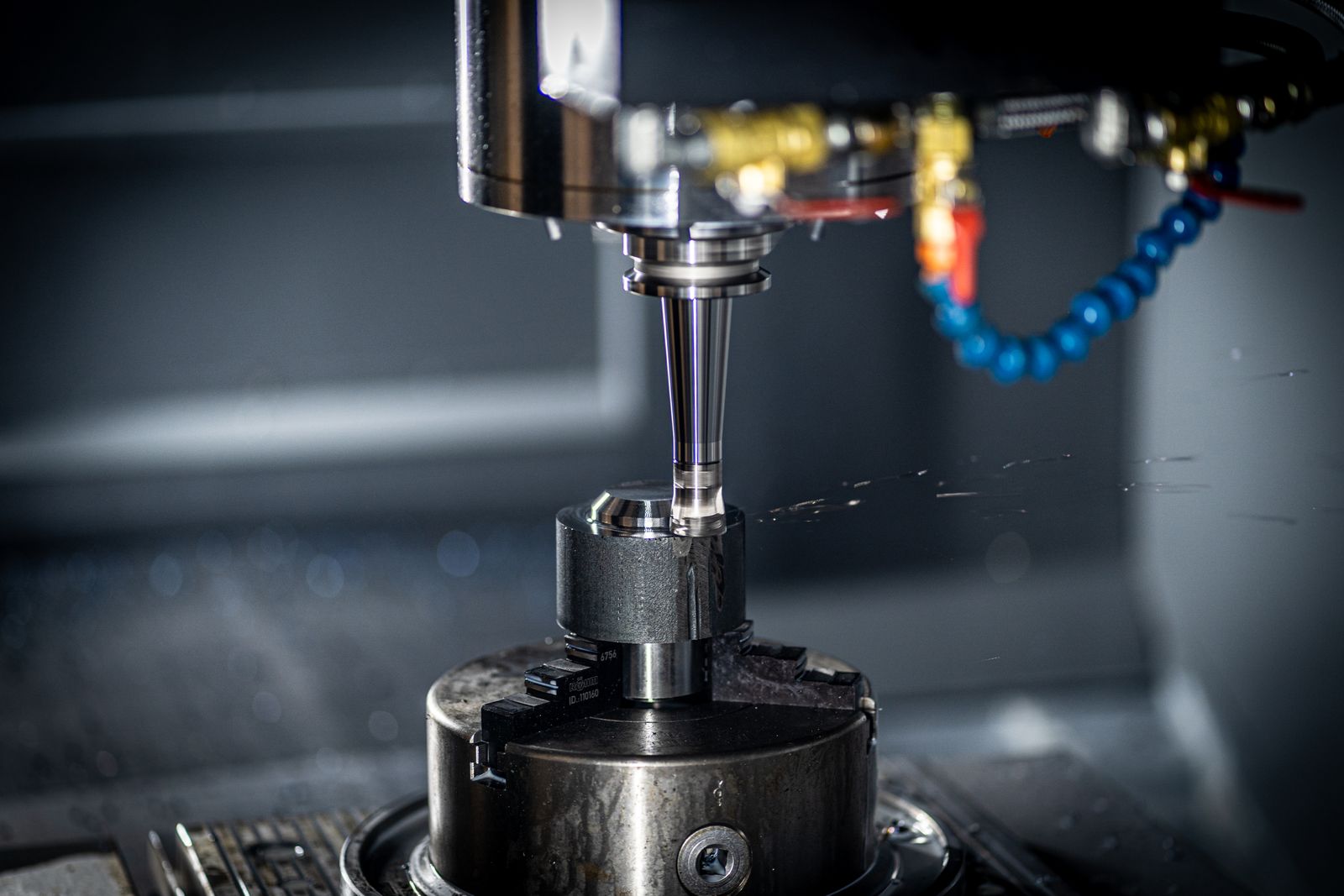
Machine Anti-Vibration Pads & Mats for CNC Machines & Presses
Precise results and protected factory floors: made-to-measure vibration isolation for machine tools, presses and production plant.
✓ Engineered selection
based on your machine data
✓ Cut to size
mats, strips, pads & multi-layer systems
✓ Fast quotes
short-notice production & express possible
✓ Industry & research
we also supply leading universities & institutes
What natural frequency does your mounting need? → Try the free vibration isolation calculator
Precision starts at the machine foundation
Machine tools are sensitive to vibration – both their own and vibration coming through the factory floor from neighbouring machines, forklifts or presses. Presses, punches and shears, in turn, generate heavy shock loads that stress foundations, floors and adjacent plant.
Better surface finish
Less vibration at the tool improves dimensional accuracy, surface quality and process stability.
Absorb shocks
Elastomers absorb impact energy from presses and punches and protect the foundation and factory floor.
Longer tool and machine life
Lower dynamic loads are gentler on spindles, guideways and tools.
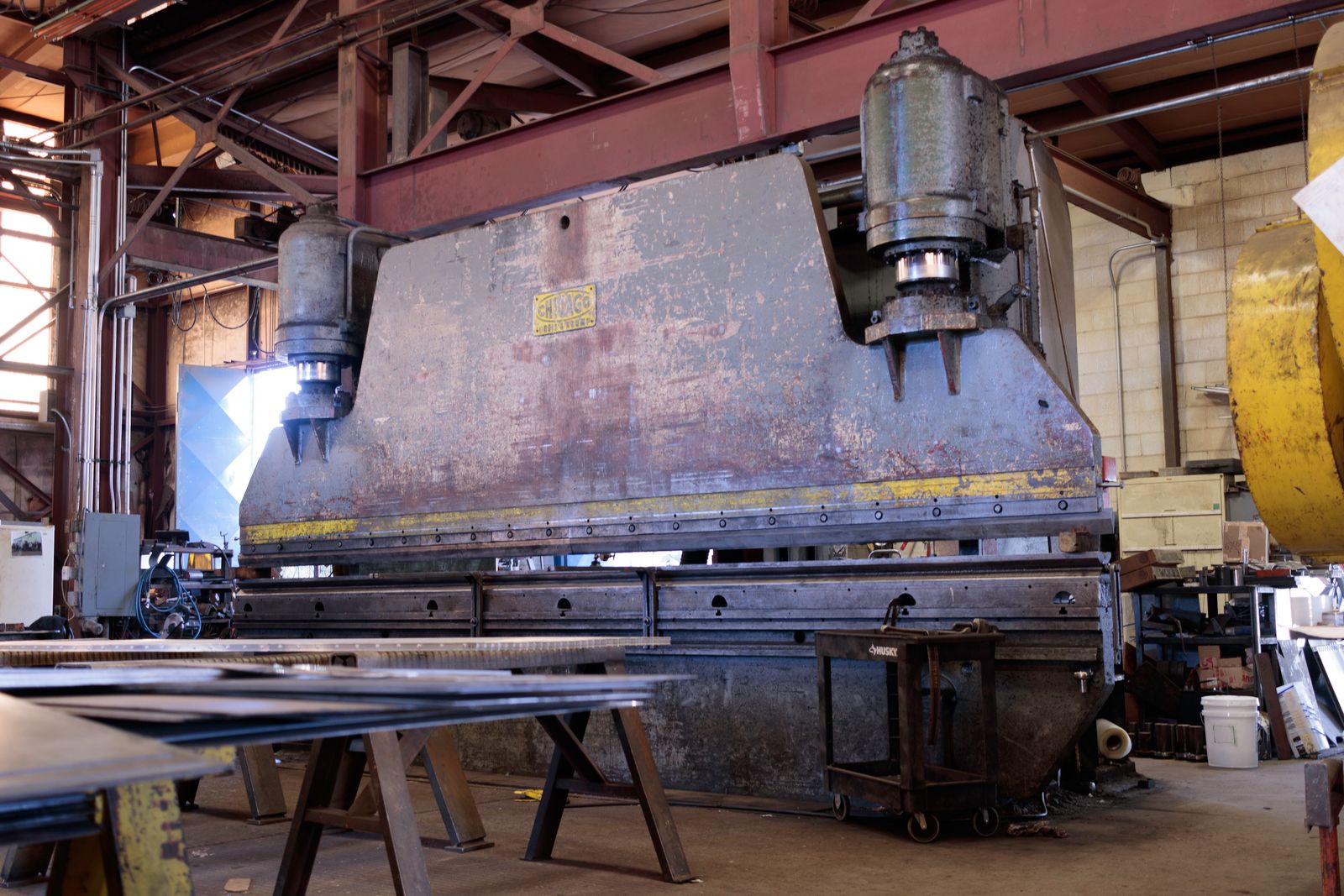
Typical machines
We supply anti-vibration solutions for machines including:
- CNC milling machines and lathes, machining centres
- Presses, embossing presses and press brakes
- Punches, shears and sawing machines
- Injection moulding machines
- Grinding and EDM machines
- Coordinate measuring machines on the shop floor
Vibration isolation to suit the machine
The best solution depends on whether you want to protect your machine from external vibration (receiver isolation) or isolate the surroundings from your machine (source isolation). We match the material and build-up precisely to this.
- Full-surface mats or pads under machine feet
- Heavy-duty mats up to 50 mm for presses and large foundations
- Materials resistant to oil and coolant (e.g. NBR, PU)
- Multi-layer systems for high dynamic forces
Recommended systems & technical data
Machine tools and presses place high static and dynamic demands on the mounting: heavy weights on small footprints, shock loads and contact with coolants. Stiff, high-load classes are mainly used here.
| Recommended system | Load range (static continuous load) | Suitable for |
|---|---|---|
| Rubber granulate/fibre mat, class G7 – G8 | 0.80 – 1.50 N/mm² | Presses, punches, heavy machining centres |
| PUR elastomer, heavy to very heavy | 0.60 – 2.5 N/mm² | high point loads, foundation mounting, protection of sensitive machines |
| NBR/PU elements | as designed | Areas with oil and coolant contact |
- Shock loads: take peak loads into account when choosing the load class
- Check and realign precision machines after initial settlement (first few days under load)
- For large presses, consider a separate resiliently mounted foundation
→ All load classes: Materials & technical data · Check your own values: Isolation calculator
Relevant datasheets (PDF, German): Rubber granulate mats G1–G8 · Elastomer sheets & pads
Worked example: machining centre and press
Simplified example, guide values only – the binding design is always project-specific. The example shows why a rotating spindle is easy to isolate, whereas the stroke frequency of a press is not.
| Quantity | Assumption / calculation | Result |
|---|---|---|
| Machine | CNC machining centre, operating weight 8,000 kg, 6 support points with one 150 × 150 mm pad each | Support area 6 × 22,500 mm² = 135,000 mm² |
| Bearing pressure | 8,000 kg × 9.81 / 135,000 mm² | ≈ 0.58 N/mm² → rubber granulate class G7 (up to 0.80 N/mm²), with reserve for dynamic loads |
| Natural frequency of the mounting (assumed) | Guide value for rubber granulate: from approx. 10–15 Hz; stiff class, so upper value | f0 ≈ 15 Hz |
Two typical sources of excitation at f0 ≈ 15 Hz:
| Source | Excitation frequency | Frequency ratio η | Isolation efficiency | Level reduction |
|---|---|---|---|---|
| Spindle at 3,000 rpm | 50 Hz | ≈ 3.3 | ≈ 90 % | ≈ 20 dB |
| Press at 120 strokes/min | 2 Hz | ≈ 0.13 (below √2) | no isolation of the stroke frequency | – |
Calculation: isolation efficiency = 1 − 1/(η² − 1) with η = excitation frequency / natural frequency; isolation only begins at η > √2. With presses, the mat therefore acts mainly as a buffer: it reduces the higher-frequency components of the shock excitation and protects the foundation and factory floor. Sufficient load reserve for peak loads is then decisive. The Standards & guidelines overview shows which standards apply to vibration.
→ Check your own values in the isolation calculator
How your project works
1. Enquiry
Tell us about your machine or plant, its weight, footprint and speed – the easiest way is via our configurator.
2. Design
We select material, hardness, thickness and format to suit the load and frequency and agree the solution with you.
3. Manufacture
Your anti-vibration mats or pads are cut to size – as a mat, strips, pads or a multi-layer system.
4. Delivery
You receive ready-to-install elements that can be fitted under machines and foundations with little effort. Made and shipped from Germany – EU-wide delivery; UK delivery DAP/DDP on request (customs handled).
Frequently asked questions
Does the machine lose stability on a resilient mounting?
Not if it is designed correctly. The hardness of the mat is chosen so that the machine stands securely while vibration is still effectively reduced.
Are the mats resistant to coolants?
For machine tools, we use materials resistant to oil and coolant, such as NBR or PU.
Can I fit out several machines at once?
Yes. We also supply entire machine parks – with uniform or individually tuned solutions.
How do I anchor a press on a resilient mounting?
Presses and punches should not stand loose on the mat, as shock forces can otherwise make the machine walk. The usual approach is anchoring in which the bolts are isolated from the machine foot by resilient sleeves and washers, so that no rigid connection to the floor is created. Alternatively, the press is bolted firmly to its own foundation block, which is itself resiliently mounted. Which option suits depends on the shock forces and the manufacturer’s specifications.
How do I level a machine on mats?
Compensate for height differences with levelling screws or levelling elements on the machine feet, which stand on the pads. As the mat gives slightly under load (static deflection), final alignment is carried out only after initial settlement in the first few days and checked again afterwards. Larger unevenness in the floor should be corrected beforehand so that all pads are evenly loaded.
How high can peak and shock loads be relative to the continuous load?
The load classes, e.g. G7 up to 0.80 N/mm², refer to the static continuous load. Short-term peak and shock loads may exceed this; by how much depends on the material and type and is confirmed in the quote. For presses and punches, therefore, plan in a reserve rather than loading the continuous load right up to the class limit. You will find the characteristic values under Materials & technical data.
Am I protecting the machine or its surroundings – what is the difference?
Presses, punches and shears are typical sources of vibration: here the machine is mounted so that shocks do not pass into the floor and neighbouring plant (source isolation). Precision machines such as grinding machines or coordinate measuring machines, on the other hand, are protected from vibration in the hall (receiver isolation). The two cases are tuned differently; for metrology rooms see also Laboratories & research.
How do I measure success before and after installation?
The most meaningful approach is a vibration measurement on the machine foot and floor, once before and once after installation, each in the same operating condition. Comparing the levels above and below the mounting shows the actual effect. Standards such as VDI 2062, DIN 4150 or, in the UK, BS 6472-1 give guidance on assessment – see Standards & guidelines.
Can I bolt a machine down through an anti-vibration mat?
Not with plain bolts: a bolt that runs straight through the mat into the floor creates a rigid acoustic bridge and short-circuits the isolation. If the machine has to be anchored, isolate each bolt from the machine foot with resilient sleeves and washers so that there is no metal-to-metal contact, or use lateral stops with a resilient interlayer. More in our guide Anti-vibration mat not working?
Is vibration affecting your production?
Send us your machine data – we will design the right vibration isolation for you.
🗣️ We can advise you in English, German and French – our team includes English- and French-speaking staff.
Short on time? The quick quote is enough to get started. Prefer more detail? Use our quote configurator or contact us directly. Want to test the material first? Order a material sample – just select the sample option in the quick quote form.
More applications: Transformers · Pumps & Compressors · HVAC & Heat Pumps · Railway & Transport · Shipbuilding & Offshore · Buildings & Foundations · Laboratories & Research
Knowledge & tools: Materials & technical data · Isolation calculator · Mat, mount or spring? · Mat not working? · Downloads · FAQ · About us