
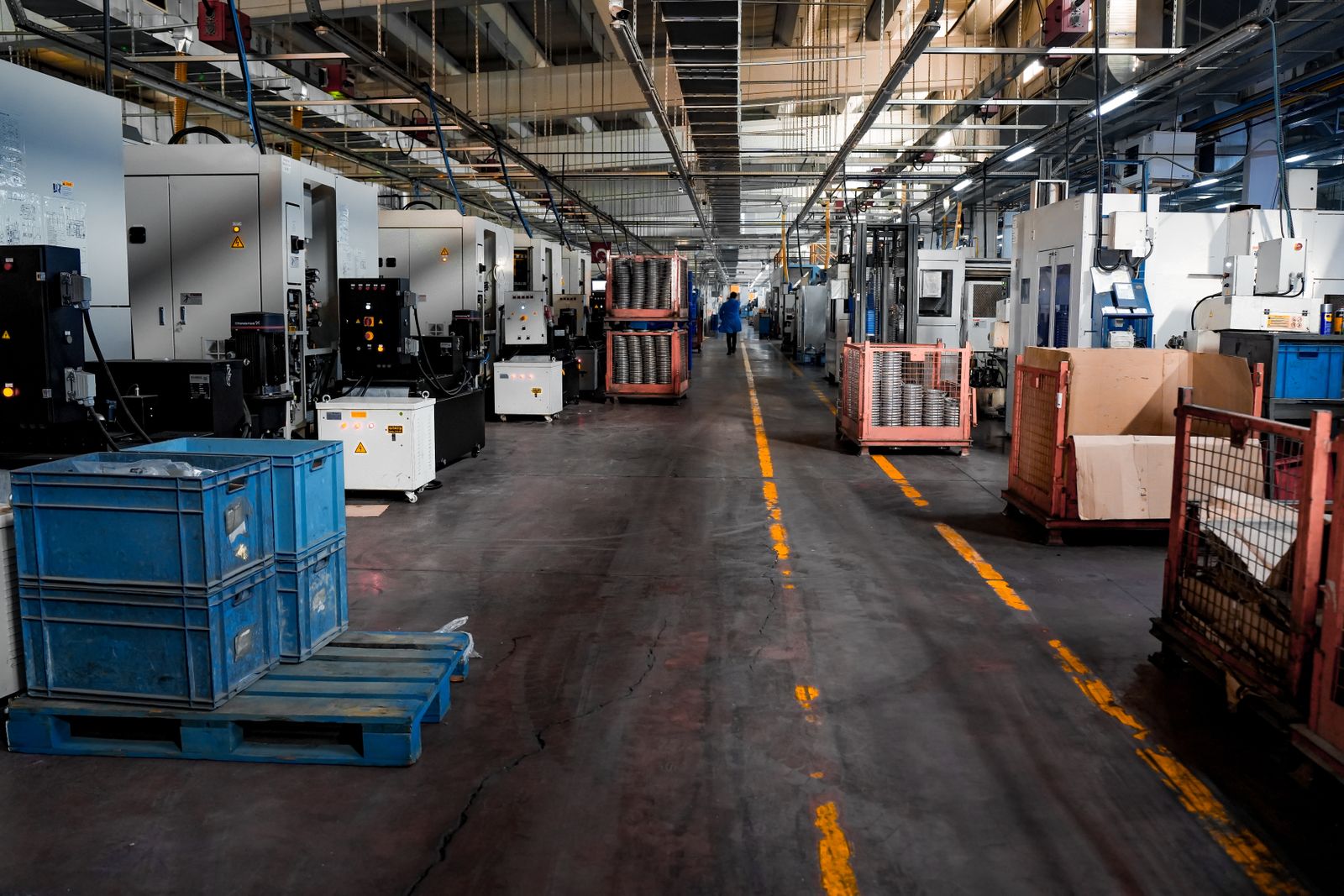
Anti-Vibration Mats Made to Measure for Machines, Plant & Buildings
Custom vibration isolation for machines, transformers, pumps, compressors, laboratories and industrial plant.
✓ Engineered selection
based on your machine data
✓ Cut to size
mats, strips, pads & multi-layer systems
✓ Fast quotes
short-notice production & express possible
✓ Industry & research
we also supply leading universities & institutes
What natural frequency does your mounting need? → Try the free vibration isolation calculator
Anti-vibration mats are used in almost every technical and industrial application: machine foundations, pump sets, compressors, CNC machines, generators, ventilation plant, test rigs, laboratory equipment, compressor stations, transformers and construction equipment. In sensitive areas such as metrology rooms, research centres and production lines, they help keep processes safe and repeatable.
What anti-vibration pads do
- Vibration damping
- Structure-borne noise isolation
- Shock absorption
- Protection against material fatigue
- Noise reduction
- Decoupling machines from the building structure
Applications – find your anti-vibration solution
Choose your application and see how we reduce vibration and structure-borne noise where it matters.
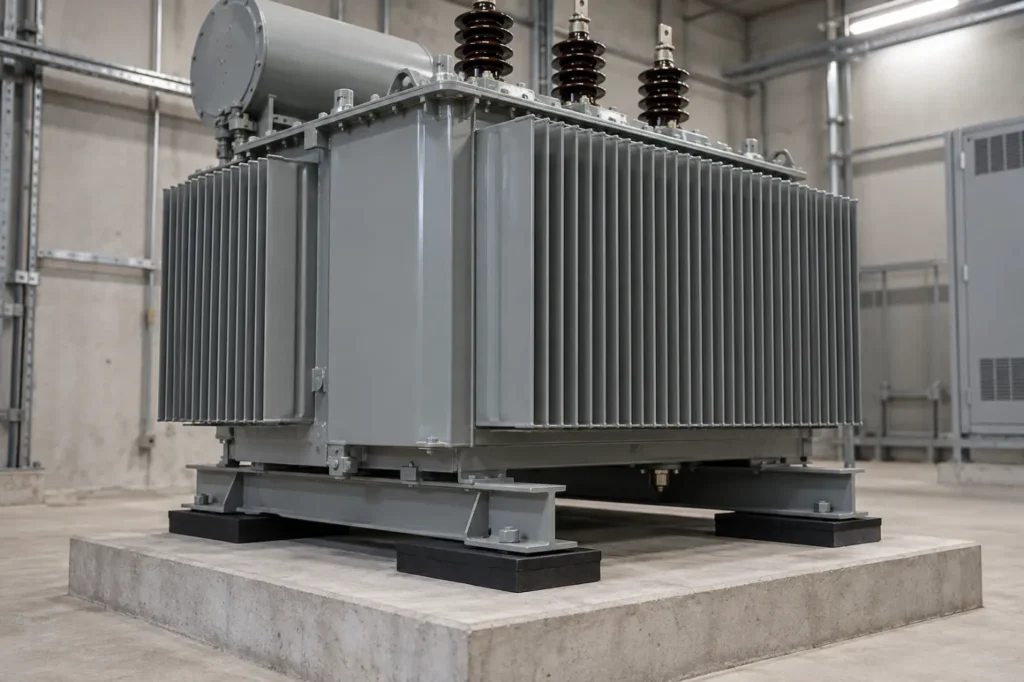
Transformers
Against transformer hum and structure-borne noise in substations, secondary substations and buildings.
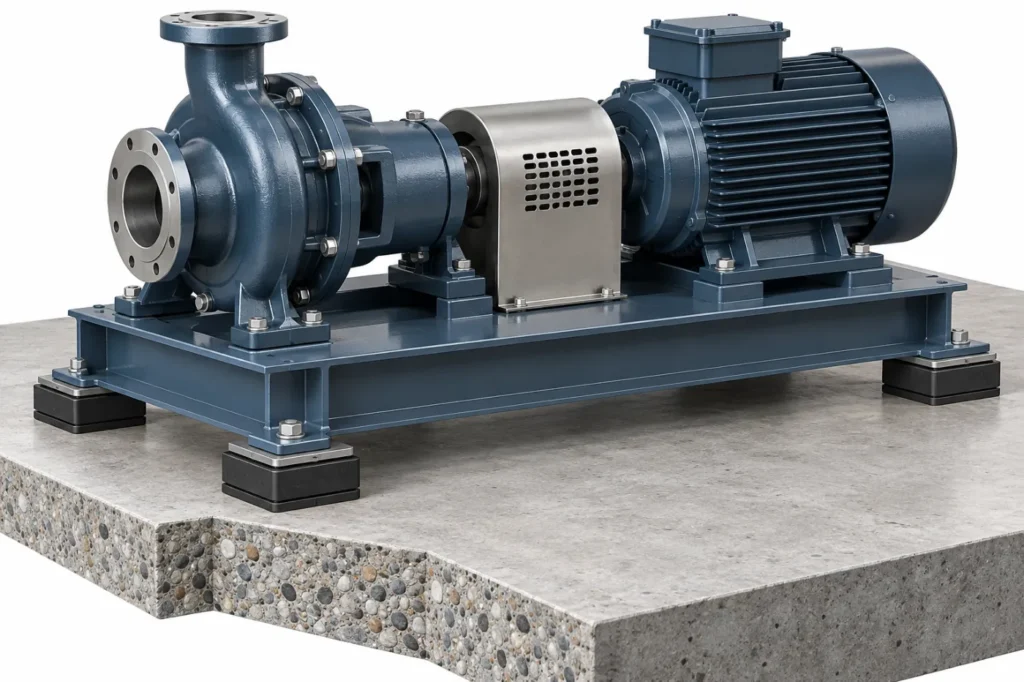
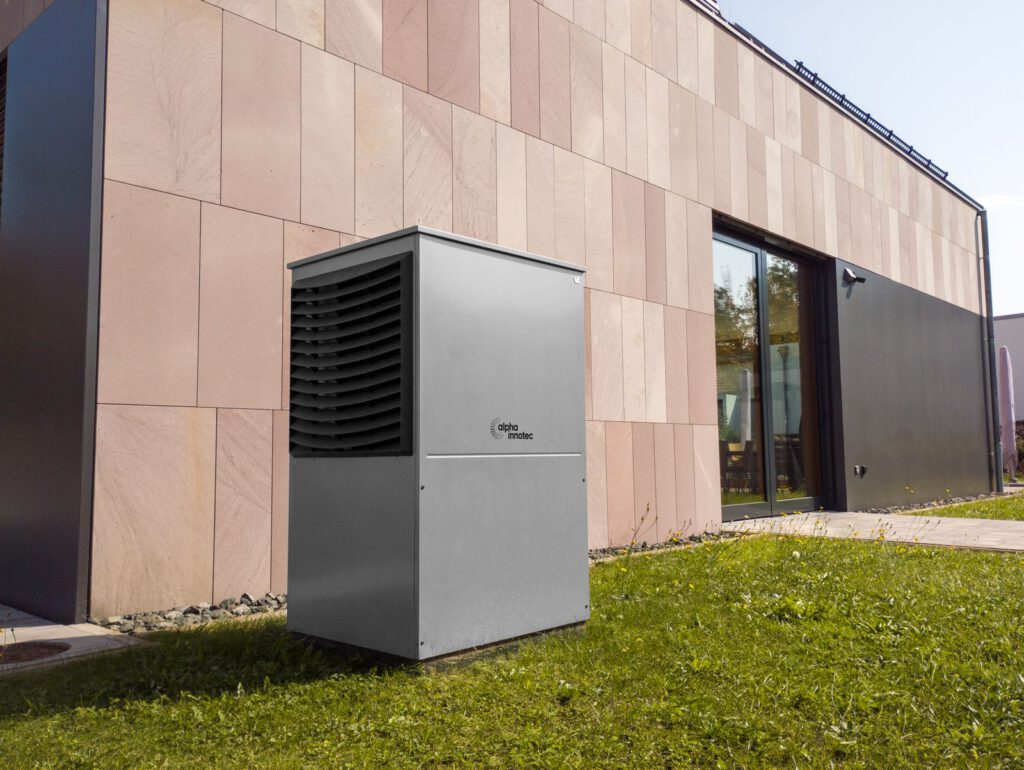
HVAC & Heat Pumps
Quieter heat pumps, ventilation and air-conditioning plant – indoors and outdoors.

Laboratories & Research
Vibration protection for balances, microscopes and sensitive measuring equipment.

Railway & Transport
Vibration protection for track, tramways, tunnels and buildings next to railway lines.

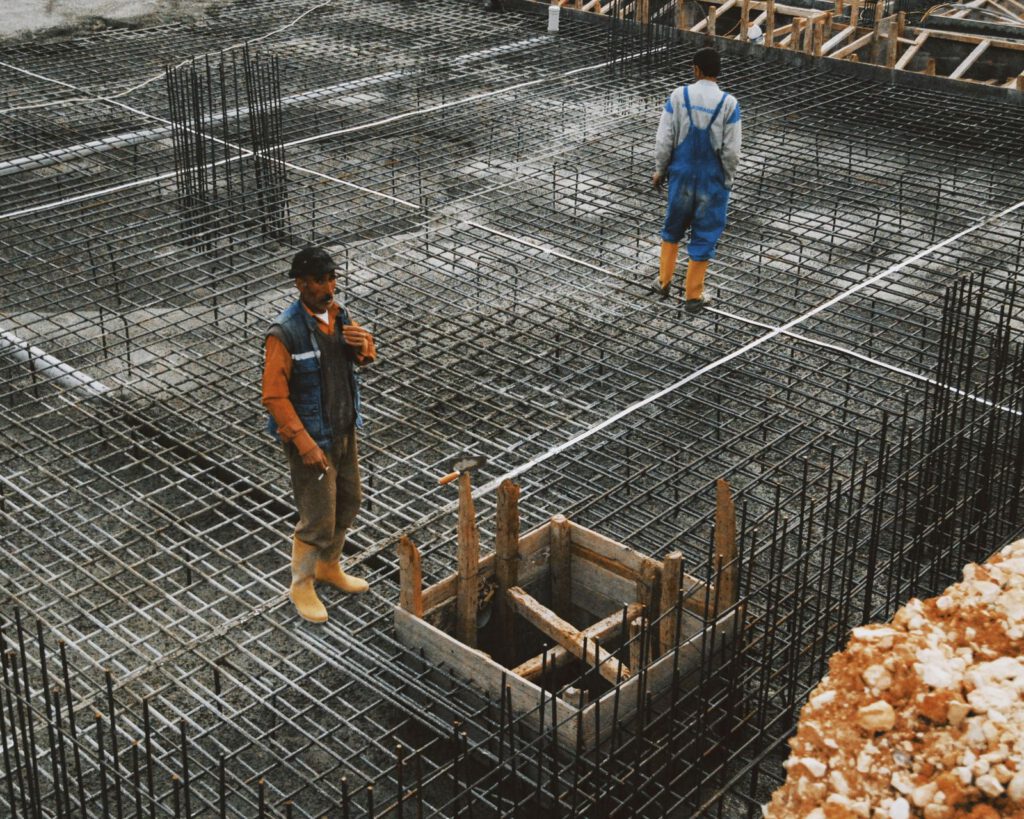
Buildings & Foundations
Resilient bearings for buildings and foundations, elastomer bearings and impact sound.
Engineering, evidence & tools
Materials & load classes
Systems, load ranges from 0.002 to 2.5 N/mm², material comparison and installation rules.
Vibration isolation calculator
Estimate natural frequency, static deflection, isolation efficiency and bearing pressure online.
Downloads
Datasheet, installation guide and specification texts as PDFs (German) – no registration required.
Standards & guidelines
BS 6472, BS 4142, DIN 4150, VDI 2062, EN 1299, ISO 815, EN 45545-2 – what each one covers.
Glossary
Natural frequency, isolation efficiency, static deflection, compression set and other technical terms explained briefly.
Material samples
Test the material first: simply request samples via the quick quote form.
New: Vibration Isolation Check. Check your planned mounting in two minutes for overload, resonance across the whole speed range, acoustic bridges and missing information – with a traffic-light result and optional frequency measurement using your smartphone. Open the Isolation Check →
Your benefits at a glance
Less vibration
Reduce vibration on machines, compressors and transformers and avoid consequential damage.
Quieter rooms
Less structure-borne noise in production halls, plant rooms and adjoining parts of the building.
Longer service life
Less wear means less maintenance, less downtime and lower costs.
Precise processes
More stable operation and more reliable measurement results – even with sensitive equipment.
Made to measure
Material, hardness, thickness and format matched to your machine and operating conditions.
Easy installation
Straightforward to install and easy to adapt to new requirements.
Heavy-duty anti-vibration mats made to measure
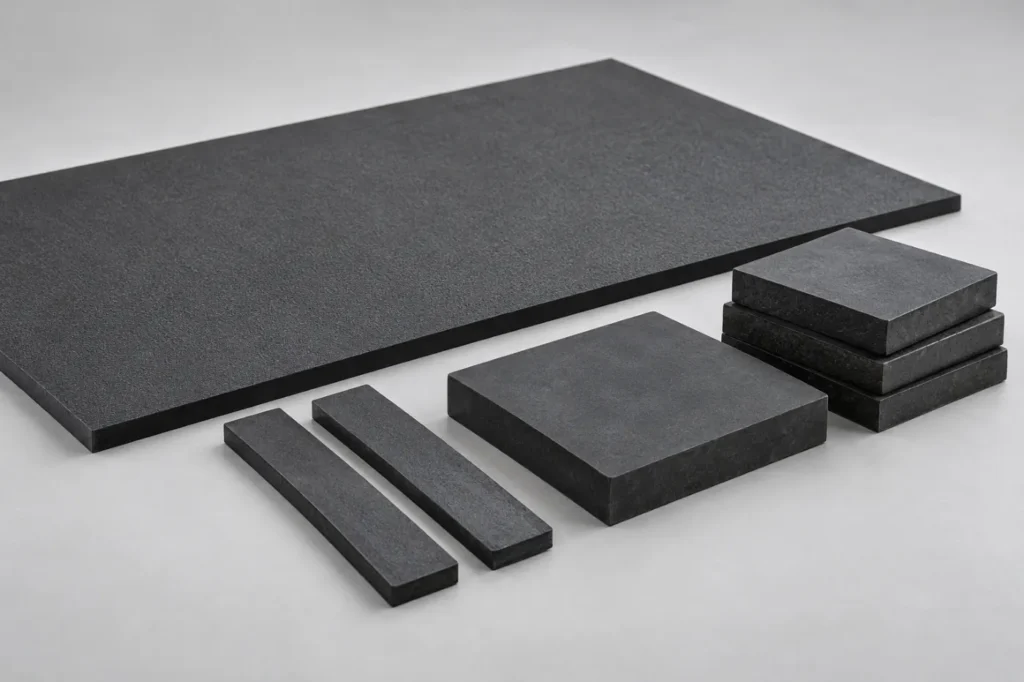
For very high loads and dynamic forces, we supply made-to-measure anti-vibration mats up to 50 mm thick. Depending on your requirements, we offer different material hardnesses, elastomer compounds and multi-layer systems. These solutions are ideal for large machine foundations, transformers, compressor stations, industrial presses and plant with high dynamic forces.
Where anti-vibration mats are used: typical industries & applications
Our anti-vibration solutions are used across a wide range of industries. Thanks to continuous development and up-to-date technical data, we can find a suitable solution for almost any application.
Typical applications
- Machine isolation
- Under machines and plant to reduce vibration and structure-borne noise.
- Prevents vibration from being transmitted into floors or the building structure.
- Noise reduction in industrial plant
- Used under noisy units such as compressors, pumps or generators.
- Rubber transmits structure-borne noise far less than steel or concrete.
- Conveying technology
- Vibratory bowl feeders and conveyor belts use resilient mountings for vibration isolation.
- Vehicle engineering
- Vehicle suspensions, swing arms and mechanical linkages use elastomer bearings to absorb torsional and shock loads.
- Protecting sensitive equipment
- Instrument and machine mounts protect sensitive measuring and precision equipment from shocks and vibration.
- Shock absorption
- Buffers, bearings and elastomer dampers reduce shock forces and extend component life.
- Food and medical technology
- Silicone-based damping elements are used for their temperature resistance and non-toxicity.
- Applications with high chemical exposure
- PU, NBR or ECO-based dampers for applications requiring resistance to oil, grease or chemicals.
- Outdoor applications
- EPDM is suitable for applications exposed to weather, ozone and UV.
Industry & manufacturing
In industrial environments, our anti-vibration mats and pads isolate machines, transformers and compressors from disruptive vibration. This vibration protection significantly extends the life of your plant, cuts repair costs and makes work easier for your staff.
Typical industries for our anti-vibration solutions
- Mechanical engineering
- Conveying technology
- Vehicle manufacturing
- Building services
- Food industry
- Medical technology
- Electrical engineering
- Heavy industry
As well as industrial customers, we also supply renowned technical universities, colleges and research institutes.
Example applications in manufacturing and processing plant

Vibration protection for machines and plant, for example:
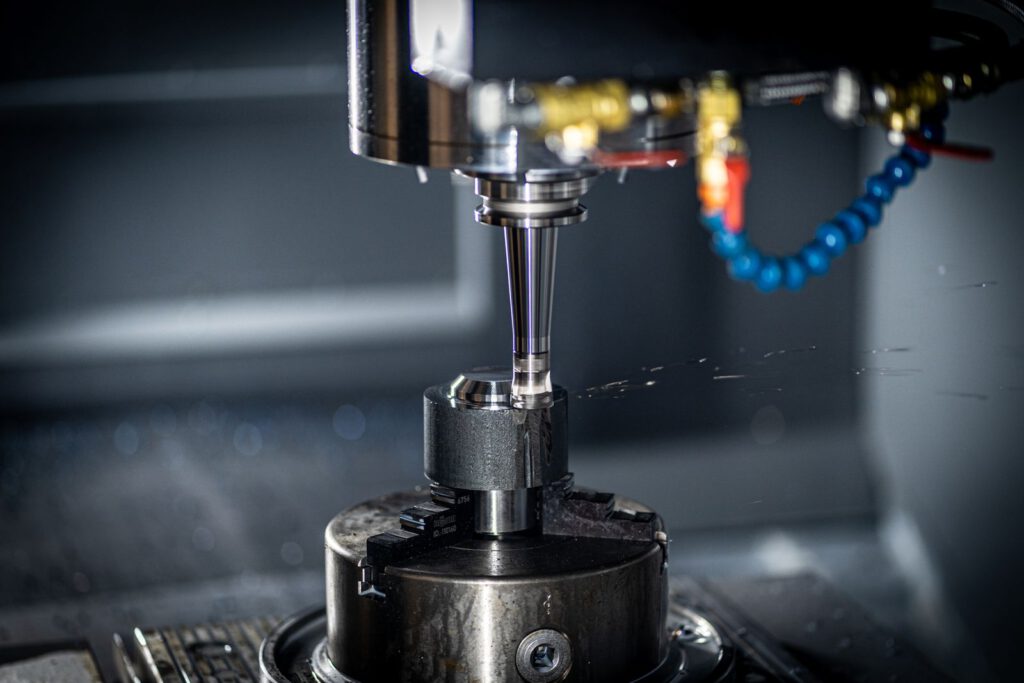
- CNC milling machines / CNC machines
- Dosing stations / dosing systems
- Lathes
- Printing presses
- Compressors
- Mixers
- Mills (e.g. ball mills, hammer mills, rotor mills, cutting mills, knife mills, mortar grinders, disc mills)
- Presses / embossing presses
- Pumps
- Agitators
- Sawing machines
- Shears
- Screening machines
- Cutting machines
- Injection moulding machines
- Punches, punch presses, automatic punching machines
- Deep-drawing presses
- Packaging machines
- Vibrating equipment
- Vibratory conveyors
- Machine tools
→ More on anti-vibration mats for CNC machines & presses

Recycling & waste processing
- Waste compactors
- Baling presses
- Jaw crushers
- Shredding machines and refuse compactors (e.g. for recycling)
- Shredders, pre-shredders, granulators and similar
We also offer high-performance titanium carbide wear plates for these applications.
Mechanical engineering & drives
Precision is everything in mechanical engineering. Our products absorb vibration and so reduce wear on sensitive components – improving manufacturing quality. They also reduce vibration on construction machinery, heavy vehicles and agricultural machinery.
- Machine isolation, e.g. with vibration-isolating foundations for heavy stationary machines
- Under machines, plant and machine foundations to reduce vibration and structure-borne noise.
- Prevents vibration from being transmitted into floors or the building structure.
- Noise reduction in industrial plant
- Used under noisy units such as compressors, pumps or generators.
- Rubber transmits structure-borne noise far less than steel or concrete.
- Hydraulic systems / hydraulic pumps and compressors
- Compressors
- Engine and gearbox test rigs
- Pumps (e.g. heat pumps, condensate pumps, compressed-air and hydraulic pumps)
- Frames for industrial robots and robotic welding cells
- Vibration isolation for construction machinery, heavy vehicles and agricultural equipment
Energy & power supply and distribution
For transformers, generators and heat pumps: we minimise vibration and increase operational reliability.
- (Power) transformers
- Traction transformers
- Generators
- Solar installations
- Wind turbines
- Combined heat and power (CHP) plants
- Refrigeration and heating applications, e.g. large air-conditioning systems
→ More on transformer anti-vibration pads and vibration isolation for heat pumps & HVAC
Secondary (re-radiated) noise is caused by vibration and can also be reduced with noise control measures. For this we offer cost-effective acoustic enclosures for heat pumps, acoustic containers, industrial silencers and large noise enclosures and acoustic barriers for indoor and outdoor use (German websites).
However, measures at the source are the most effective – so isolating the machine should always come first.


Railway & Transport
In transport, our products ensure smoother running of trains, metros and trams, more passenger comfort and less operating noise.
- Vibration and noise reduction for rails in the track bed (for high-speed trains, metros and trams)
- Railway tunnels
- Damping of vibration and oscillation in locomotives, multiple units, metros and trams
→ More on railway vibration isolation
We also offer fire-retardant acoustic mats, e.g. for construction work in tunnels or stations.
Shipbuilding & Offshore
Anti-vibration solutions protect marine engines and generators from the harmful effects of waves, wind and typical shock loads at sea. The vibration-damping components help extend maintenance intervals and keep operations safe in extreme conditions.
Elastomer bearings and sliding bearings are used under glass dome roof structures to allow horizontal movement caused by sea state and temperature differences.
Under the main masts of sailing yachts, they prevent damage to the hull from high loads and deformation.
Very robust isolation mat up to 50 mm thick, also suitable for low temperatures (cold-flexible, temperature-resistant from −35 °C to +90 °C), cut to your requirements:
→ More on marine anti-vibration mounts for shipbuilding & offshore

Construction, buildings and infrastructure
For vibration isolation of buildings, bridges and foundations – so that vibration does not enter the building structure.
- Vibration-isolating building and concrete foundations
- Elastomer bearings in concrete and reinforced concrete construction carry loads from roofs, beams and slabs and accommodate rotation and horizontal movement.
- Bridge bearings
- Tunnels
- Swimming pools (e.g. in spas and hotels)
- Impact sound insulation for floors and walls
→ More on resilient bearings for buildings & foundations

We also offer noise control solutions for construction sites to hire and noise control to buy (e.g. for construction sites and industry; German websites).
Material options and technical specifications
Our anti-vibration mats are made from high-quality rubber and elastomer composites with a defined Shore hardness and tested compressive strength. Depending on the application, mats are available for static and dynamic loads, high frequencies, low frequencies, temperature cycling and resistance to oil and chemicals. The materials are durable, slip-resistant, weather-resistant and designed for continuous industrial use. You will find all load classes under Materials & technical data and more answers in our anti-vibration mats FAQ.
| Material | Typical benefit | Typical applications | Special properties |
|---|---|---|---|
| Natural rubber (NR) | Good elasticity and vibration damping | Machine mounting, general vibration isolation, conveying technology | Very good dynamic properties, high resilience |
| NBR (nitrile rubber) | Oil and grease resistance | Engines, pumps, hydraulic power units, compressors | Resistant to oils, fuels and lubricants |
| EPDM | Weather, UV and ozone resistance | Outdoor plant, air-conditioning units, building services, railway engineering | Very good resistance to ageing and weathering |
| Silicone (VMQ) | High temperature resistance | Food technology, medical technology, process engineering | Temperature-resistant up to approx. 250 °C, physiologically safe |
| Polyurethane (PU/PUR) | High load capacity and long service life | Heavy-duty machines, presses, construction machinery | High abrasion resistance and mechanical strength |
| ECO (epichlorohydrin rubber) | Good oil and chemical resistance | Automotive, industrial plant, power units | Good ageing resistance and low gas permeability |
| CR (neoprene) | General industrial applications | Mechanical engineering, marine and electrical engineering | Good weather, oil and flame resistance |
| SBR (styrene-butadiene rubber) | Cost-effective vibration damping | General machine mounting, standard industrial applications | Good mechanical properties at low cost |
| FKM (Viton®) | High chemical and temperature resistance | Chemical industry, high-temperature units | Highly resistant to aggressive media and heat |
| Sylomer® / PUR elastomers | Precise vibration isolation | Building services, railway and mechanical engineering | Very good structure-borne and impact sound insulation |
| Criterion | Significance |
|---|---|
| Shore hardness | Affects stiffness and damping |
| Temperature resistance | Hot/cold operating range |
| Media resistance | Contact with oil, grease, chemicals |
| Rebound resilience | Behaviour under dynamic load |
| Abrasion resistance | Service life under continuous load |
| Ageing & ozone resistance | Outdoor suitability |
| Internal damping | Resonance and noise reduction |
Frequently asked questions
What is the difference between vibration damping and vibration isolation?
Vibration isolation interrupts the transmission path: a resilient mounting with a low natural frequency ensures that as little vibration as possible passes from the machine into the floor and building – or, the other way round, from the surroundings to a sensitive instrument. Damping converts vibration energy into heat and mainly limits the amplification at resonance. Anti-vibration mats combine both; what matters is the right tuning. Our glossary explains the terms.
What is the difference between an anti-vibration mat, a pad and a plate?
A mat is laid over a large area or the full footprint under a machine or foundation, for example from the roll or cut to size. Pads are small individual pieces under machine feet or support points; strips go under frames and plinths. Plates are elastomer sheets in fixed formats and thicknesses from which pads are also cut. Which form suits you depends mainly on the bearing pressure – see Materials & technical data.
Full-surface mat or strips and individual pads – which, when?
The deciding factor is bearing pressure: the mat should work in the middle to upper part of its load class. Heavy machines with a large footprint often suit a full-surface mat. For lighter machines, the pressure on a full-surface mat is too low – strips or pads then increase the pressure and improve isolation. Work out the pressure with the vibration isolation calculator.
Can I get a material sample?
Yes. Select the material sample option in the quick quote form and briefly describe your application – we will then put together suitable samples. We will agree terms and shipping with you afterwards.
What information do you need for a quote?
For an initial selection, all we need is the machine weight, the footprint or the number and size of support points, the speed or excitation frequency, and details of the environment (indoors or outdoors, oil, temperature). Photos or a sketch of the installation are also helpful. Send us the data via the quick quote form or the quote configurator.
Do anti-vibration pads reduce noise as well as vibration?
Partly. Anti-vibration pads and mats reduce structure-borne noise – the vibration that travels through floors, walls and pipework and is re-radiated elsewhere as a hum. They do not reduce the airborne noise a machine radiates directly into the room; for that you need an enclosure or acoustic hood. In many complaints about low-frequency hum in neighbouring rooms, however, the structure-borne path is the main cause.
Do you deliver to the UK and Ireland?
Yes. Our anti-vibration mats and pads are made and shipped from Germany with EU-wide delivery. For the UK we deliver DAP or DDP on request and handle the customs paperwork; for Ireland and other EU countries there are no customs formalities, and B2B invoices are issued under the reverse-charge procedure. Prices are quoted in EUR excl. VAT, and the lead time is stated in the quote – just use the quick quote.
→ You will find more answers in our anti-vibration mats FAQ and the glossary.
Delivery to the UK, Ireland and worldwide
- Made and shipped from Germany – EU-wide delivery.
- UK delivery DAP or DDP on request (customs handled) – please include your EORI number with business orders.
- Ireland and other EU countries: no customs formalities; B2B invoices under the reverse-charge procedure with a valid VAT ID.
- Prices on request (EUR, excl. VAT); the lead time is stated in your quote. Material samples on request.
Request a quote for your anti-vibration solution
🗣️ We can advise you in English, German and French – our team includes English- and French-speaking staff.
Individual advice and engineered selection
Every machine has its own vibration behaviour – that is why we offer technical advice on selecting the right anti-vibration solution. Based on your data (weight, frequency, support area, dynamic loads, foundation design), we recommend the right material thickness, load capacity and design. For complex applications, we can prepare a detailed vibration analysis on request.
Fast quotation process
Simply fill in our selection form with your machine or foundation data. Once received, we review your application technically and send you a tailored quote with a technical recommendation, lead time and prices. Short-notice production and express delivery are also possible.
Step 1 (optional): fill in the Excel form (German) – or use the quick quote form directly
Step 2: email it to us: info@antivibrationsmatten.com
Step 3: receive your quote
Applications: Transformers · Pumps & Compressors · CNC Machines & Presses · HVAC & Heat Pumps · Railway & Transport · Shipbuilding & Offshore · Buildings & Foundations · Laboratories & Research
Knowledge & tools: Materials & technical data · Isolation calculator · Mat, mount or spring? · Mat not working? · Downloads · Standards & guidelines · Glossary · FAQ · Quote configurator